
Beyond reactive recovery: Rwanda pioneers recovery readiness
In May 2023, severe floods and landslides struck 14 districts across Rwanda, with the Western and Northern provinces bearing the brunt of the disaster. The event killed 137 people and destroyed 5,472 homes, with lasting consequences for affected communities and critical infrastructure. Damages and economic losses were estimated at RWF 222.31 billion, approximately USD 193.32 million, while recovery needs were assessed at RWF 518.58 billion, approximately USD 415 million. Beyond the immediate humanitarian and infrastructure impacts, the disaster exposed gaps in recovery coordination, financing and data systems, underscoring the importance of planning for recovery before disasters occur.
While Rwanda has made significant progress in disaster risk management, including through legislation, contingency planning and modernized public financial management systems, arrangements for planning, financing and coordinating recovery remain areas for further strengthening. The piloting of the Recovery Readiness Framework and Assessment Tool (RRFAT) in 2025 provided an opportunity to assess these gaps and identify priorities for strengthening recovery readiness.
Under the umbrella of the International Recovery Platform (IRP), UNDRR piloted the Recovery Readiness Framework and Assessment Tool (RRFAT) in collaboration with Rwanda’s Ministry in Charge of Emergency Management (MINEMA). The pilot assessed Rwanda’s preparedness for recovery, rehabilitation and reconstruction across four domains: governance, finance, capacity, and data and knowledge.
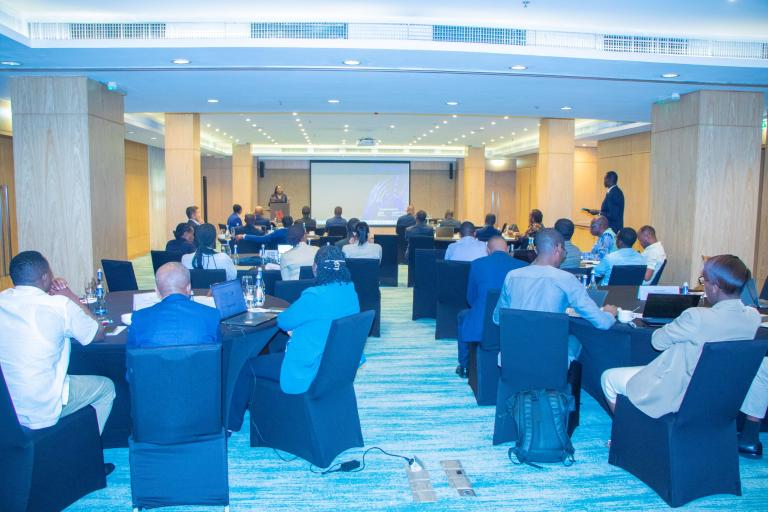
The process brought together representatives from more than 35 institutions, including national ministries and government agencies, the private sector, civil society organizations, the National Council of Persons with Disabilities, United Nations entities and development partners. Participating organizations included UNDP, FAO, IOM, WHO and WFP. An initial assessment workshop was held in November 2025, followed by a validation workshop in December 2025 to review the findings and refine the recommendations.
Results and recommendations
The assessment found that Rwanda has established foundations for recovery readiness across all four domains, although important gaps remain. While the results reflect progress in financial transparency, disaster risk management and technical capacity, they also highlight the need to strengthen the systems that enable timely and coordinated recovery. In particular, Rwanda needs more predictable recovery financing, clearer institutional responsibilities, stronger district-level capacity and better-connected data systems.
The assessment complements broader efforts, including Rwanda’s Disaster Risk Financing Strategy and existing financial instruments, such as the USD 141 million Disaster Risk Management Development Policy Financing operation with a Catastrophe Deferred Drawdown Option (Cat DDO), approved by the World Bank in September 2025, as well as Rwanda’s engagement under the Global Shield against Climate Risks.
As the first African country to pilot the framework, Rwanda’s experience offers important lessons for other countries seeking to strengthen their recovery systems. The process brought together government institutions and partners to assess existing arrangements, identify gaps and agree on practical priorities for improvement, contributing to national and regional dialogue as well as knowledge exchange on strengthening recovery readiness.
"Rwanda is setting the pace for disaster recovery preparedness in Africa. This pilot will inspire others to take proactive steps towards recovery."
Egide Mugwiza, Director-General, Response and Recovery Operations, MINEMA
Finalising the RRFAT and deployment across the region
Feedback from the piloting phase has helped to improve the RRFAT, leading to a more concise and streamlined guidance, scoring criteria and integrating considerations for local government capacity and inclusion.
The tool is now being deployed across the world, with Uganda and Mozambique having already started the implementation of the assessment tool.
In Mozambique for instance, it is part of a broader initiative that also includes a cost-benefit analysis of disaster risk reduction investments, drawing on Japan's experience, and the collection and analysis of disaster loss and damage data to inform readiness for inclusive recovery planning and decision-making. Overall, it aims to strengthen Mozambique's capacity to plan and invest in inclusive recovery, reduce disaster impacts and support faster, more resilient reconstruction in line with the principle of Build Back Better.
Editor's note
- WMO Member:
- Rwanda