
Media resilience and risk communication take centre stage at Lake Chad Basin
News was produced by: UNDRR, UNDRR AF
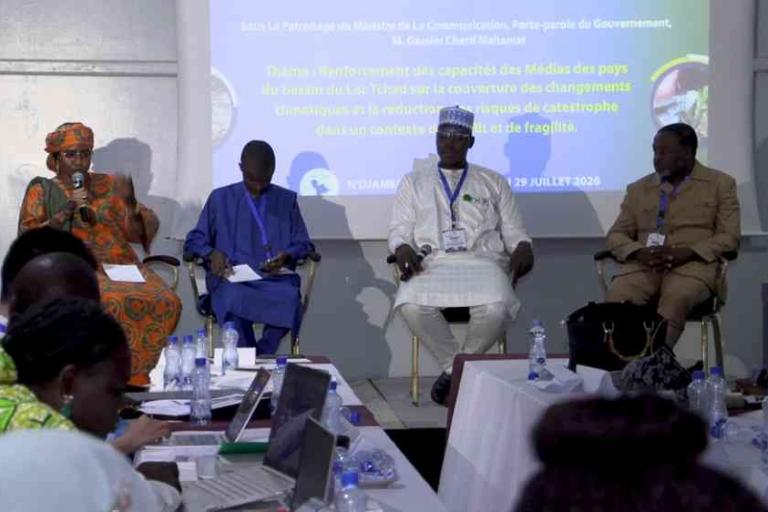
N'Djamena, Chad – 29 July 2026 – As climate change, disasters and protracted crises increasingly converge across the Lake Chad Basin, strengthening the capacity of media to communicate risk and support early action has become an essential component of disaster risk reduction. Journalists, editors, disaster management authorities, United Nations agencies and regional partners gathered in N'Djamena from 27–29 July for a regional workshop aimed at strengthening climate reporting and media resilience across one of Africa's most vulnerable regions.
The workshop, organized by UNESCO in partnership with the African Union of Broadcasting (AUB) and hosted by Chad's Office National des Médias Audiovisuels (ONAMA) under the patronage of the Government of Chad, brought together media professionals from Cameroon, Chad, Niger and Nigeria. The event forms part of a regional initiative supporting media institutions to strengthen climate and disaster reporting, develop institutional disaster preparedness and response plans, and expand cross-border collaboration on issues affecting communities across the Lake Chad Basin.
Reliable information for a region facing complex risks
Home to more than 30 million people, the Lake Chad Basin faces recurring droughts, floods, land degradation, climate variability and environmental change, while many communities continue to experience conflict, displacement and food insecurity. In these complex and fragile contexts, reliable public information plays a critical role in helping people understand risks, prepare for hazards and make informed decisions before disasters strike.
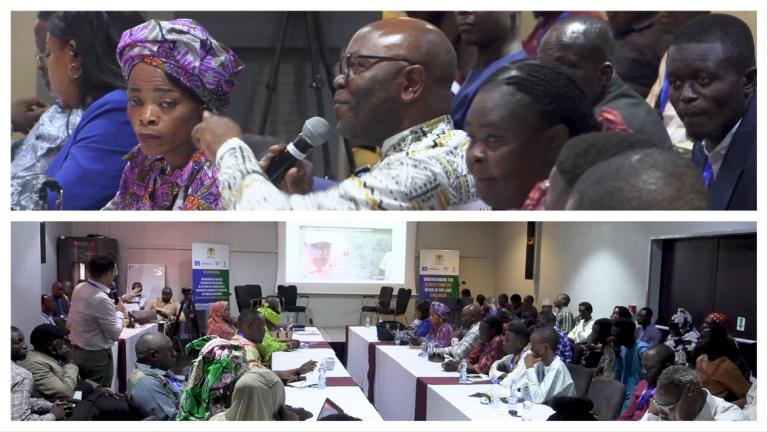
Throughout the three-day workshop, participants refined disaster preparedness and response plans for their media organizations, reviewed collaborative climate reporting projects, and exchanged practical experiences on solutions-oriented journalism, digital tools, artificial intelligence and reporting in fragile and conflict-affected environments. A field visit at the Lake Chad, peer learning and practical exercises helped journalists translate technical information into stories that are relevant, accessible and actionable for local audiences.
From forecasts to life-saving journalism
A dedicated session led by the United Nations Office for Disaster Risk Reduction (UNDRR) focused on Early Warning Systems and Risk Communication: Journalism that Saves Lives, equipping participants with practical tools to transform scientific forecasts into clear, accurate and actionable public information. Working in simulated newsroom teams, journalists responded to a fictional early warning bulletin by producing public alerts, radio scripts and social media messages under tight deadlines. Rather than simply repeating technical forecasts, participants were challenged to explain what the hazard meant for people, who was at risk, what actions should be taken, and why the information could be trusted. Through peer review and guided feedback, they refined their reporting using core principles of effective warning messages, including clarity, relevance, urgency and actionable advice.
Understanding what drives early action
Building on this exercise, UNDRR introduced a second scenario that shifted the focus from information delivery to human behaviour. Participants explored why communities sometimes fail to act despite receiving timely warnings, identifying barriers such as mistrust, previous false alarms, social norms, gender dynamics, fear of looting, limited resources and uncertainty about evacuation options.
The discussions highlighted that effective risk communication is not only about transmitting information but also about understanding the realities that shape people's decisions. By developing editorial angles that addressed these barriers—from explaining why a warning is different to providing practical guidance on where to go and what to do—journalists explored how reporting can strengthen trust, encourage early action and support a culture of preparedness. The exercises reinforced a central principle of people-centred early warning systems: warnings save lives only when they lead to informed action.
Strengthening media resilience across borders
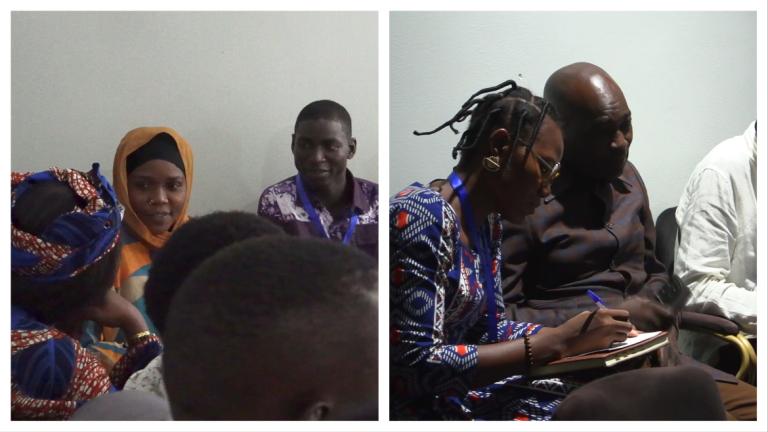
This workshop is part of UNDRR’s efforts to strengthen media’s approach to disaster coverage amid growing recognition that media institutions are themselves critical actors in disaster preparedness.
Resources
Risk Media hub
Visit this toolkit for news media professionals reporting on disasters and resilience
Covering disaster from a different lens
Take this course to build the skills needed for coverage that goes beyond immediate impacts and put the spotlight on underlying risks, vulnerability, and opportunities for reducing future disaster losses.
As climate-related hazards continue to intensify across the Lake Chad Basin, investing in media resilience and effective risk communication will remain essential for supporting informed decision-making, strengthening preparedness and advancing resilience in vulnerable communities.
- WMO Member:
- Chad